Conversation Handwritten Font for Crafters & Sellers
If you’ve ever spent hours tweaking a label, reworking an invitation layout, or second-guessing whether your sticker text will cut cleanly on your Cricut—then you know how much a single font can make or break your product’s first impression. Conversation is that rare handwritten font that feels personal without looking childish, modern without sacrificing warmth, and minimalist without feeling cold. It’s not just another script—it’s a display font built for real craft work.
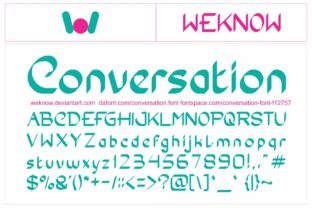
Visually, Conversation balances clean line weight with subtle organic variation—like ink drawn with gentle pressure, not a rigid vector trace. There are no exaggerated swashes or distracting flourishes. Instead, it offers quiet confidence: soft entry and exit strokes, even spacing, and a rhythm that reads effortlessly at small sizes and commands attention at large ones. That balance is why it works so well across physical and digital products—from tiny jar labels to 24-inch farmhouse signs.
Where Conversation Shines in Your Product Line
This isn’t a font for body copy or long paragraphs—and it shouldn’t be. Conversation is a display font, designed for impact, clarity, and emotional resonance in short-form use. Here’s where I reach for it most:
- Candle and soap labels: Its clean, modern handwriting conveys artisan quality without cliché—no “rustic” overkill, just honest charm. On matte kraft tags or glossy sticker sheets, it stays legible even at 8–10 pt.
- Wedding stationery: Welcome boards, menu cards, and place cards gain quiet elegance with Conversation. It pairs beautifully with calligraphy-style headers or soft watercolor backgrounds—never competing, always complementing.
- Digital printables: Planner covers, habit trackers, and printable wall art benefit from its approachable authority. Customers notice the difference between “designed” and “thrown together”—and Conversation signals intention.
- SVG designs for cutting machines: With smooth curves and consistent stroke width, Conversation cuts cleanly on Silhouette Cameo and Cricut Maker—no jagged edges or unintended breaks on small letters like “e” or “a.”
- Product packaging & boutique tags: Whether it’s a linen tea bag tag or a recycled cardboard gift box, Conversation adds handmade credibility while keeping your brand feel cohesive and refined.
Readability & Real-World Production Notes
One thing I love about Conversation is how readable it stays—even when scaled down. I’ve used it for 6 mm vinyl stickers (think mini enamel pin backs or jewelry tags) and it holds up far better than many decorative scripts. For best results: avoid all-caps in tight spaces, stick to sentence case for names and short phrases, and always test-cut at your final size before batching. On printed cards, it looks crisper on uncoated or lightly textured paper—avoid ultra-glossy stocks that mute its natural texture.
It’s also smartly engineered for mockups. When I drop Conversation into Canva or Adobe Express previews for Etsy listings, it renders cleanly—not pixelated or oddly spaced—so my customers see exactly what they’ll get. That consistency builds trust before the first click.
Smart Pairings That Elevate Your Designs
While Conversation stands strong solo, it sings in harmony. My go-to pairings:
- A clean sans serif (like Montserrat or Inter): Use Conversation for headlines or names, and the sans for details—ingredients, dates, sizing info. This combo keeps things scannable and professional, especially on product labels or digital templates.
- A quiet serif (like Lora or Playfair Display): Perfect for wedding invites or literary-themed printables. Conversation adds warmth; the serif grounds it with timeless structure.
- Another expressive handwritten font—sparingly: If you need contrast, try layering Conversation as your main title font and a bolder, more textured script only for initials or accents. Less is more here.
Licensing, Formats & What’s Included
Conversation comes as a standard OTF file—fully compatible with Cricut Design Space, Silhouette Studio, Adobe Creative Cloud, Canva, and Microsoft Office. No extra installers or converters needed. It includes basic Latin character support (A–Z, numbers, common punctuation), making it ideal for English-language product labels, invitations, and digital downloads.
Importantly, Conversation is licensed for commercial use. That means you can confidently use it on physical goods you sell (mugs, tote bags, greeting cards), in digital templates you license on Etsy, in SVG files for crafters, and in client branding projects—no attribution required. Just keep your license active if you’re reselling design assets that embed the font.
Why This Font Fits Your Brand—Not Just Your Project
When customers choose handmade, they’re choosing feeling: care, authenticity, intention. Fonts shape that perception faster than almost anything else. A stiff, generic sans serif says “functional.” An overdone script says “trendy but forgettable.” Conversation says “thoughtful, human, and quietly confident.”
It supports brand consistency without demanding uniformity—whether you’re designing a spring collection of botanical stickers or launching a new line of ceramic mugs, Conversation adapts without losing its voice. And because it’s minimalist—not minimal—you retain room for color, texture, and illustration to carry expressive weight, while the type remains the steady, trustworthy anchor.
For me, it’s become the default font for anything that needs to feel both personal and polished: holiday gift tags stamped on recycled cardstock, seasonal SVG bundles for fellow crafters, and even the small “hand-poured” line on my candle jars. It doesn’t shout—but it’s never overlooked.